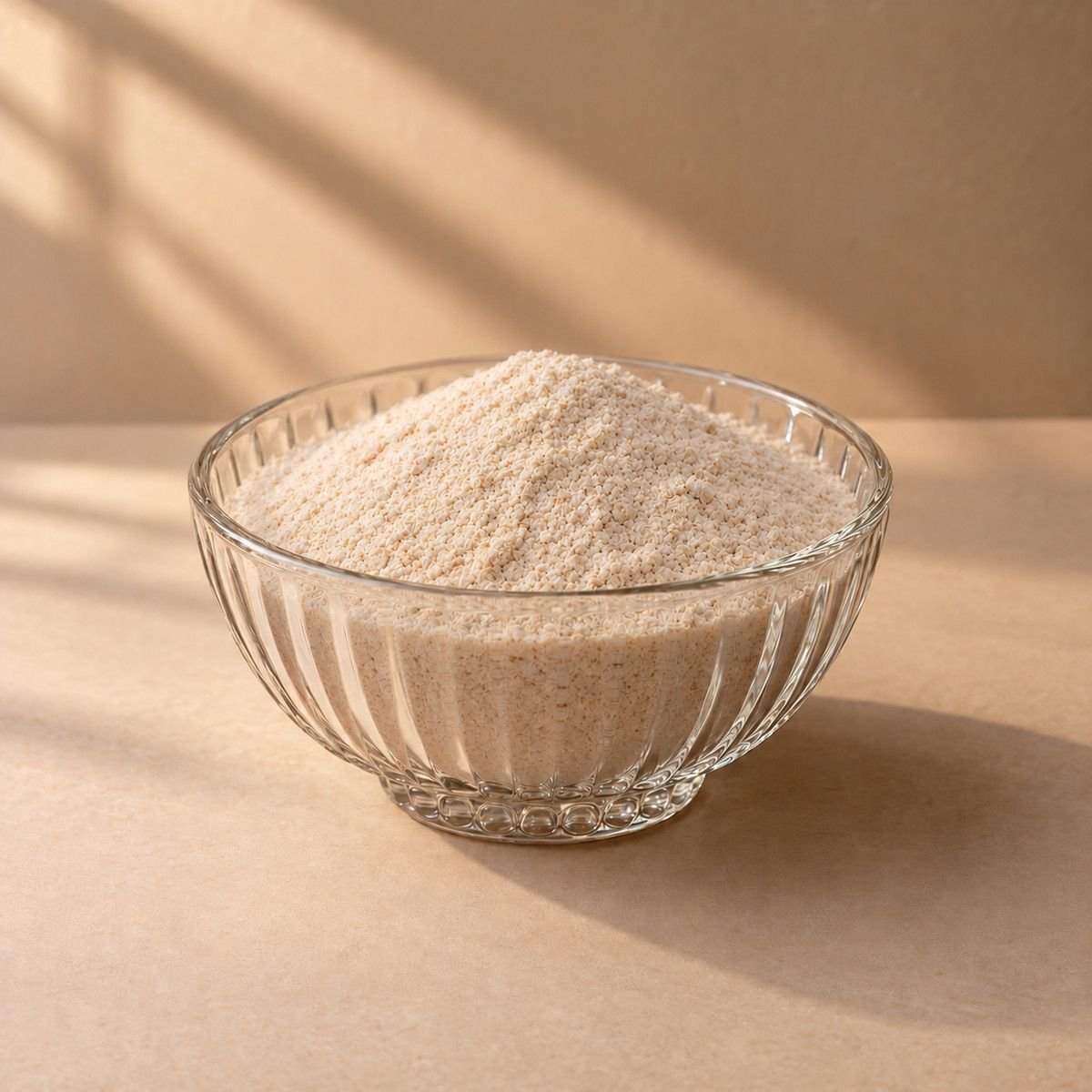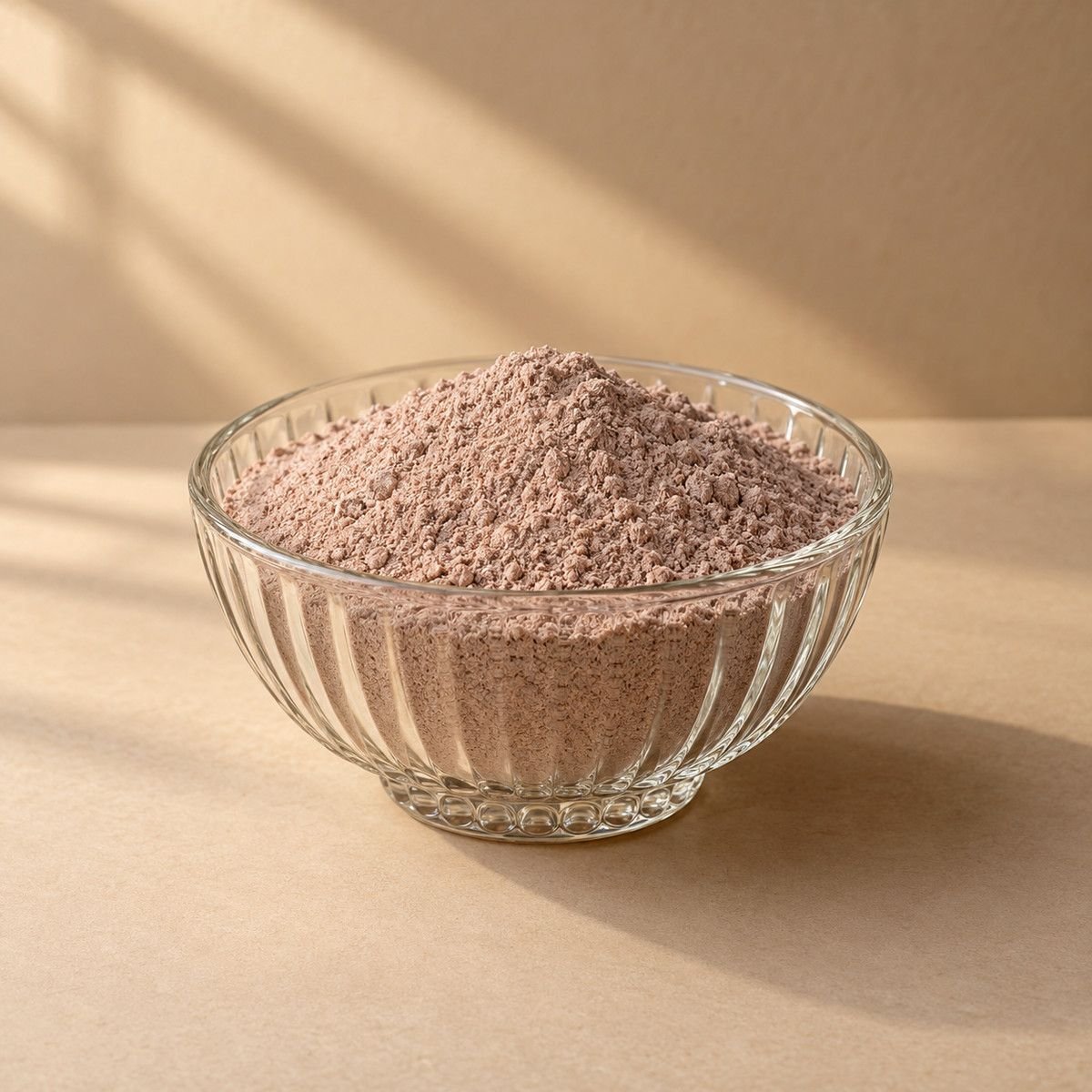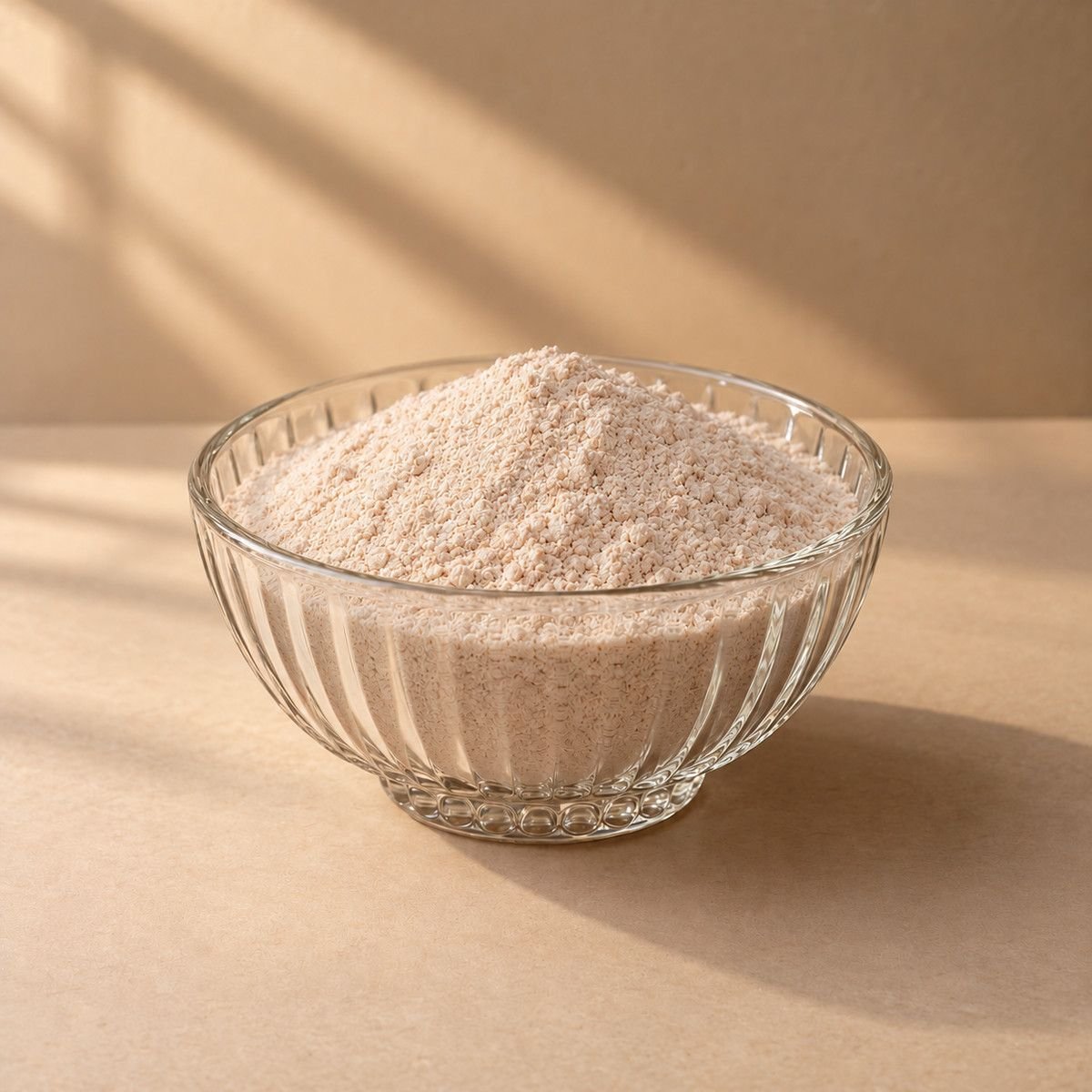
Most of us have never asked when our atta was milled. We check the price, maybe the brand, and the “best before” date. The milling date, which matters more than any of those, is usually not on the pack at all.
What happens to wheat when it becomes flour
A wheat grain is a sealed package. The bran is the wrapper, and inside it the germ holds a small amount of oil. As long as the grain is whole, that oil is protected. Whole wheat, kept cool and dry, lasts a very long time.
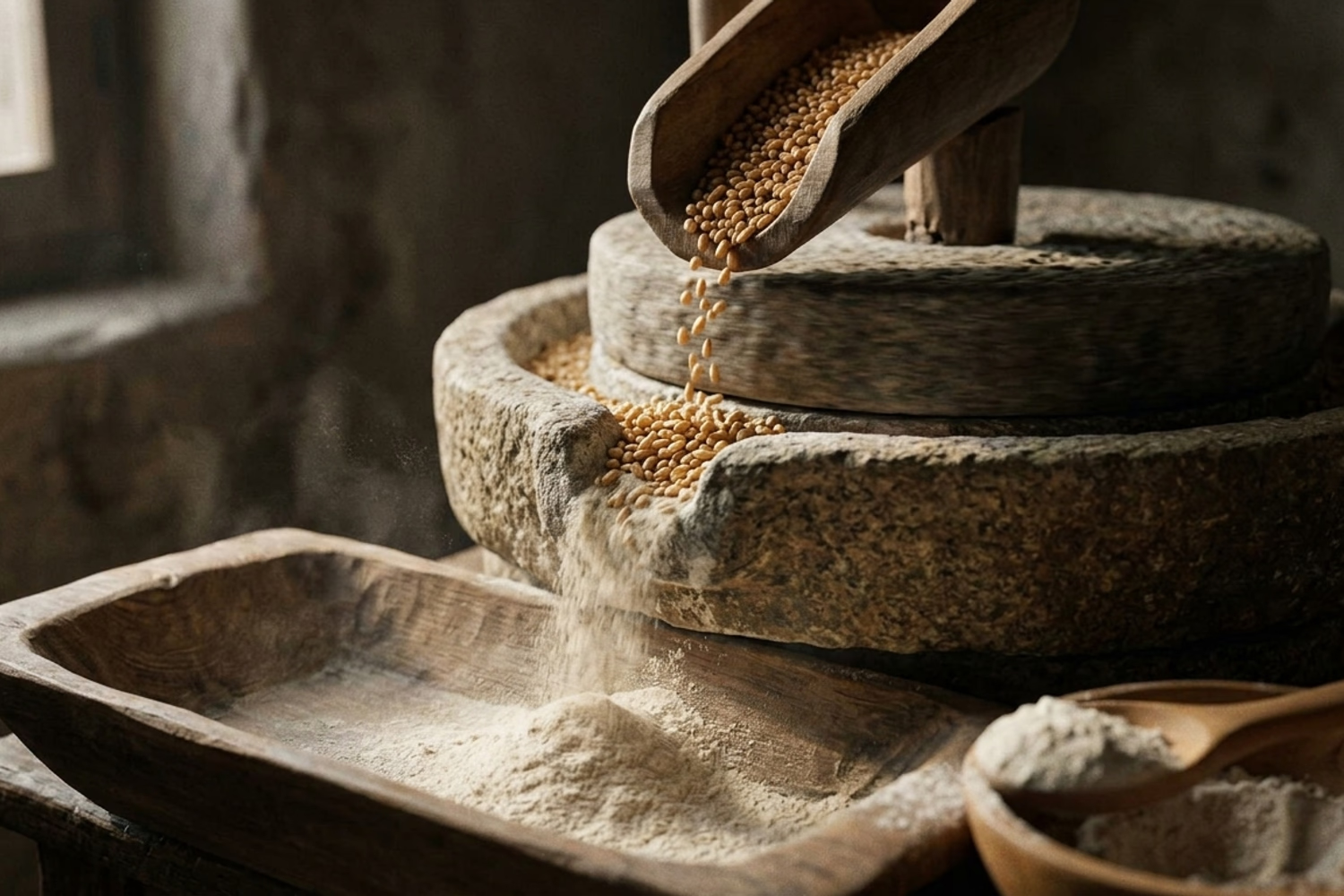
Milling breaks the package open. The oil in the germ is now spread through the flour and in contact with air. From that day it slowly reacts with oxygen. Nothing dramatic happens in the first week. But the aroma that makes a fresh roti smell like wheat is the first thing to fade, and months later the flour can taste flat or faintly bitter.
This is also why maida keeps so well. The germ and bran are removed, so there is very little left to turn. Whole wheat atta is the opposite: it keeps everything, including the part that spoils.
How long atta really stays fresh
There is no single number, because heat and humidity change everything. As a working guide:
- First few weeks: the flour is at its best. Dough smells sweet and the rotis stay soft.
- A few months, stored well: still perfectly good to eat, with less aroma.
- Beyond that, or stored badly: bitterness starts to appear.
A Hyderabad kitchen in May is a hard place for flour. A steel dabba next to the stove will not give you the same result as an airtight jar in a cool cupboard.
How to tell if your atta has turned
Do not trust your nose alone. Take a pinch of the dry flour and taste it. Fresh atta is mild and slightly sweet. Old atta is bitter, and sometimes leaves a sharp, scratchy feeling in the throat. If you taste that, the oil has gone off.
Why most atta is milled long before you buy it
It is simply easier. A large mill grinds in bulk, packs, stores in a warehouse, ships to a distributor, and then to a shop shelf. Each step adds weeks. By the time a pack reaches your kitchen it may already have spent a good part of its life as flour.
What we do differently
At Earthenic the wheat stays whole for as long as possible. We stone-mill in small batches, slowly, and we mill close to when the flour is needed rather than to fill a shelf.
It is less convenient for us. It means smaller runs and more planning. But the grain does its waiting as grain, not as flour, and you can taste the difference in the first roti.
How to store atta at home
- Move it to an airtight container as soon as you open the pack.
- Keep it away from the stove, the window and anything damp.
- Buy the amount you will finish in a few weeks. A smaller pack used fresh beats a large pack used slowly.
- In peak summer or the monsoon, keep the extra in the fridge.
Ordering in Hyderabad
Earthenic is based in Hyderabad and delivers across the city. If you want atta that was milled for your order rather than for a shelf, this is what we do. You can order on WhatsApp or browse the pantry.
Common questions
How long does whole wheat atta last?
Stored airtight in a cool, dry place, whole wheat atta usually stays good for a few months. In the fridge or freezer it keeps noticeably longer. The flavour is best in the first few weeks after milling.
How do I know if my atta has gone bad?
Taste a small pinch of the dry flour. Fresh atta tastes mild and slightly sweet. Atta that has turned tastes bitter and can leave a sharp feeling at the back of the throat. Smell alone is not a reliable test.
Why does whole wheat flour spoil faster than maida?
Whole wheat flour contains the germ, and the germ carries natural oils. Those oils react with air once the grain is ground. Maida has the germ removed, so there is less to go off.
Where can I buy freshly milled atta in Hyderabad?
Earthenic is based in Hyderabad and stone-mills whole wheat atta in small batches, close to when it is ordered. You can order on WhatsApp for next-day delivery in the city.
Should I keep atta in the fridge?
If you will finish the pack within a few weeks, an airtight container in a cool cupboard is enough. In a hot or humid kitchen, or if you buy in larger quantities, keep part of it in the fridge.