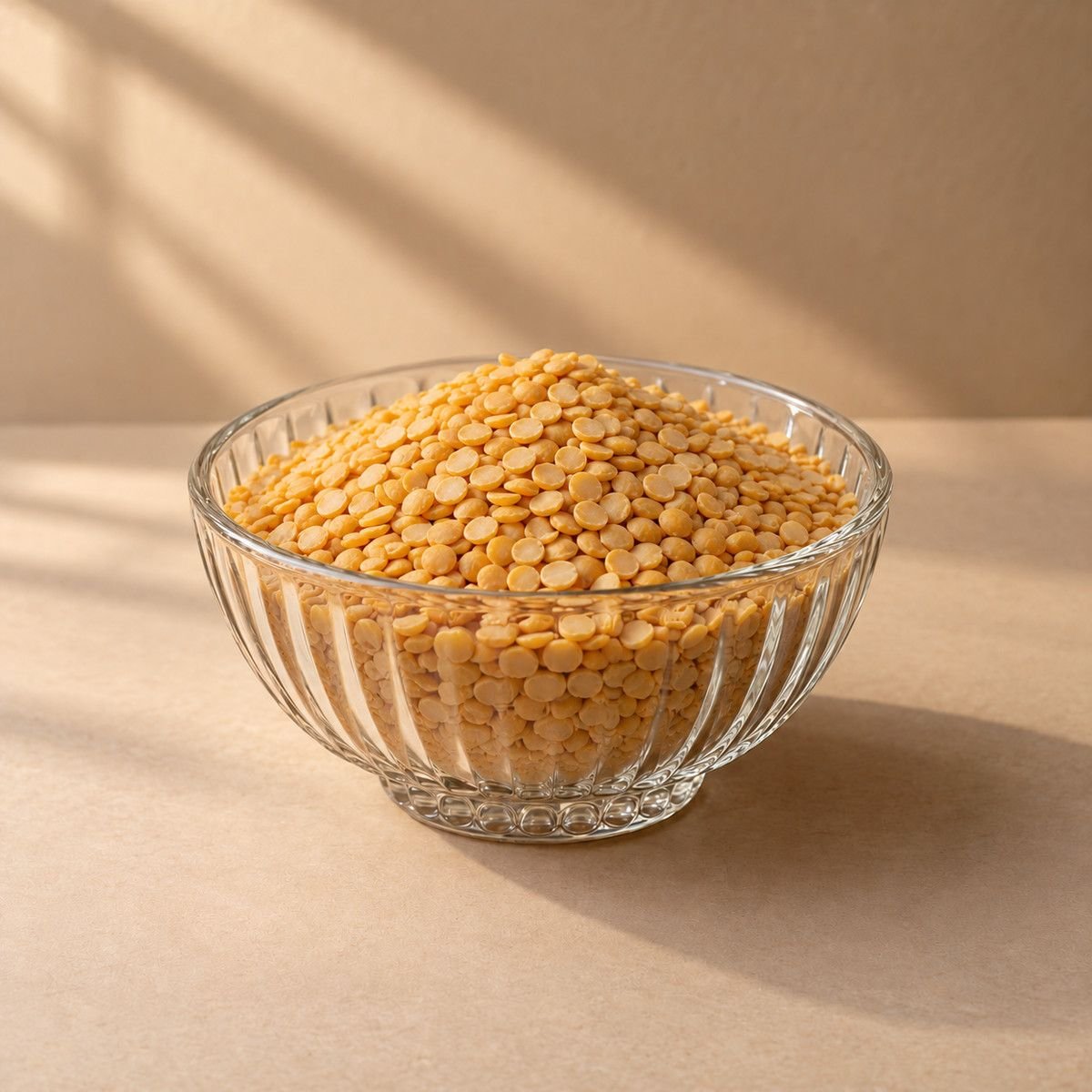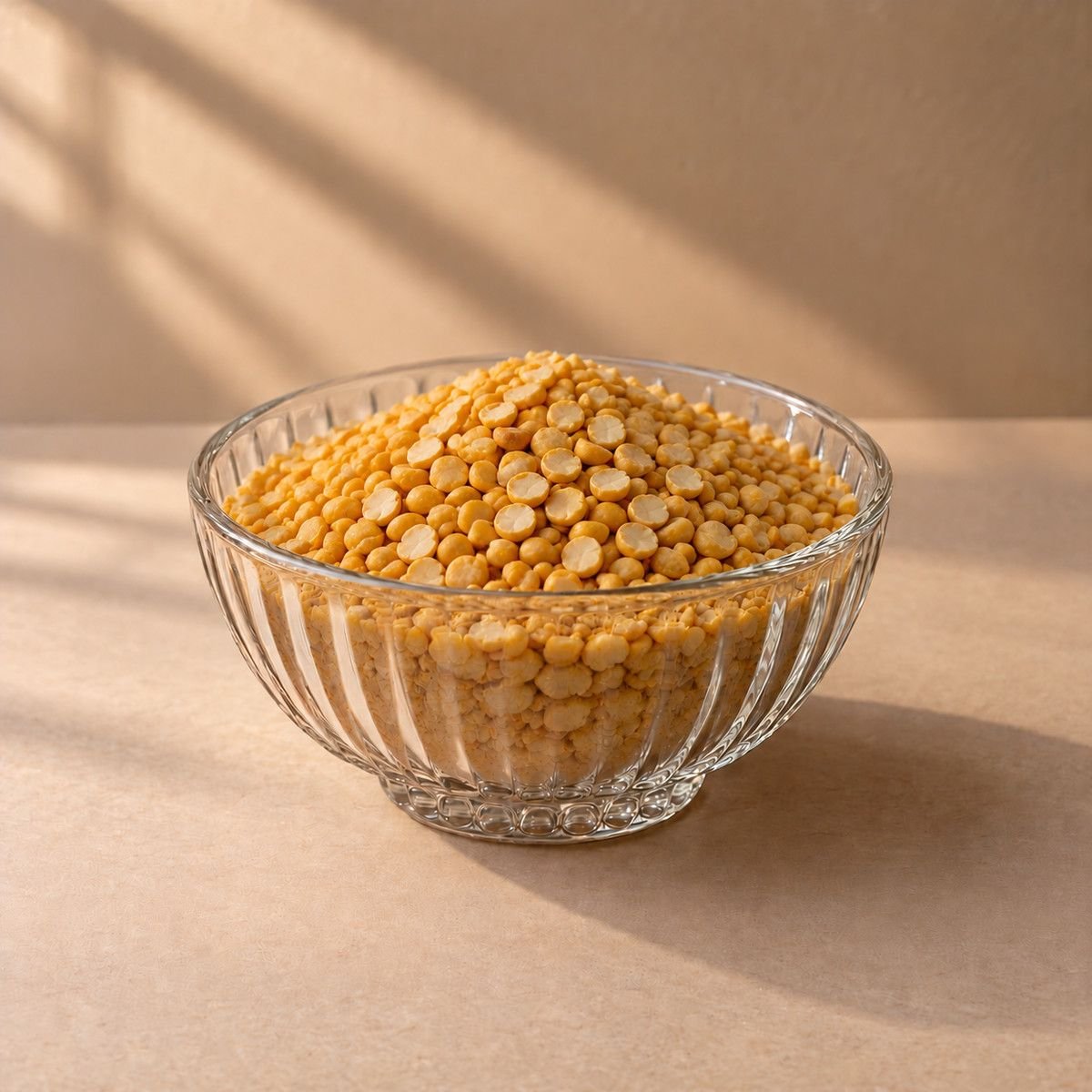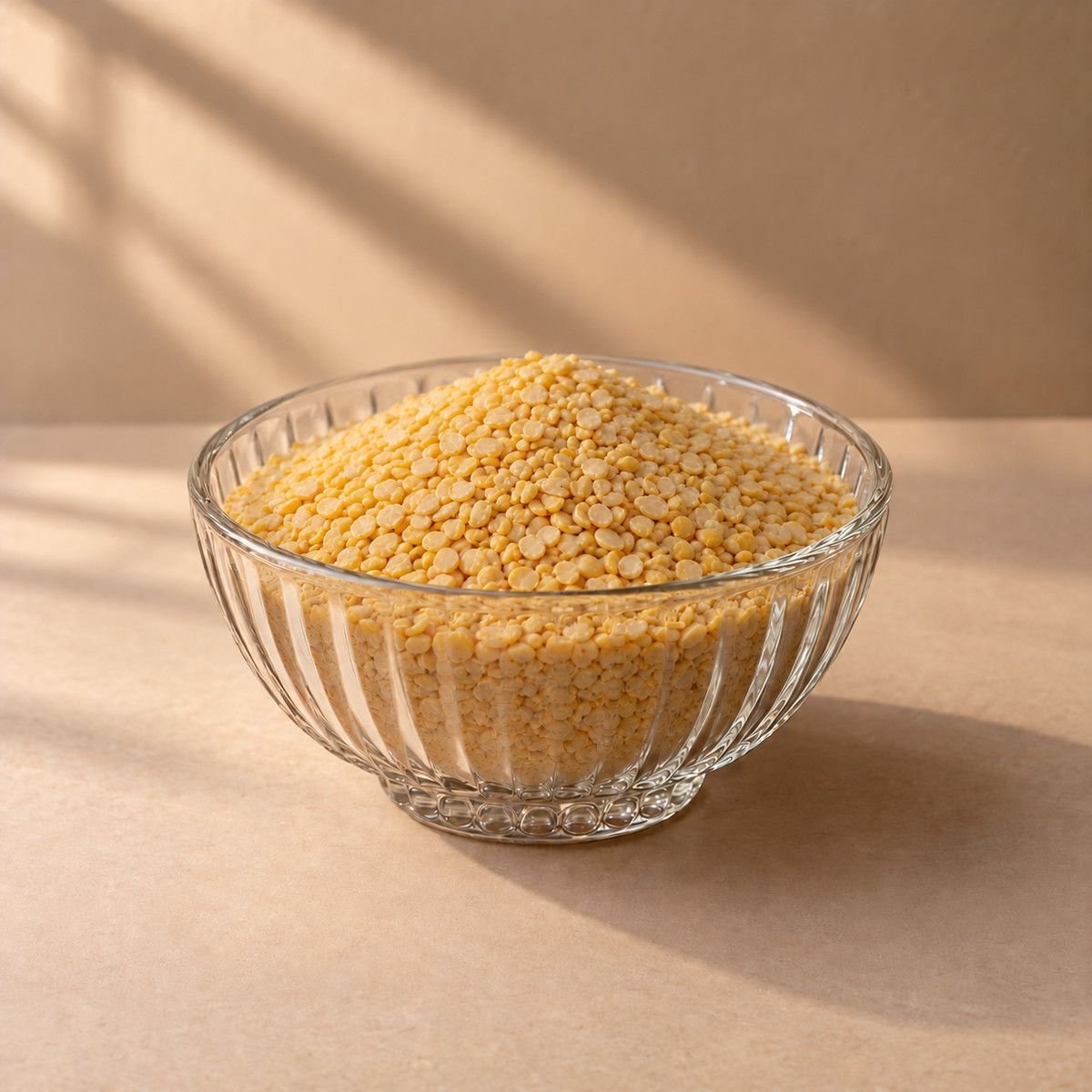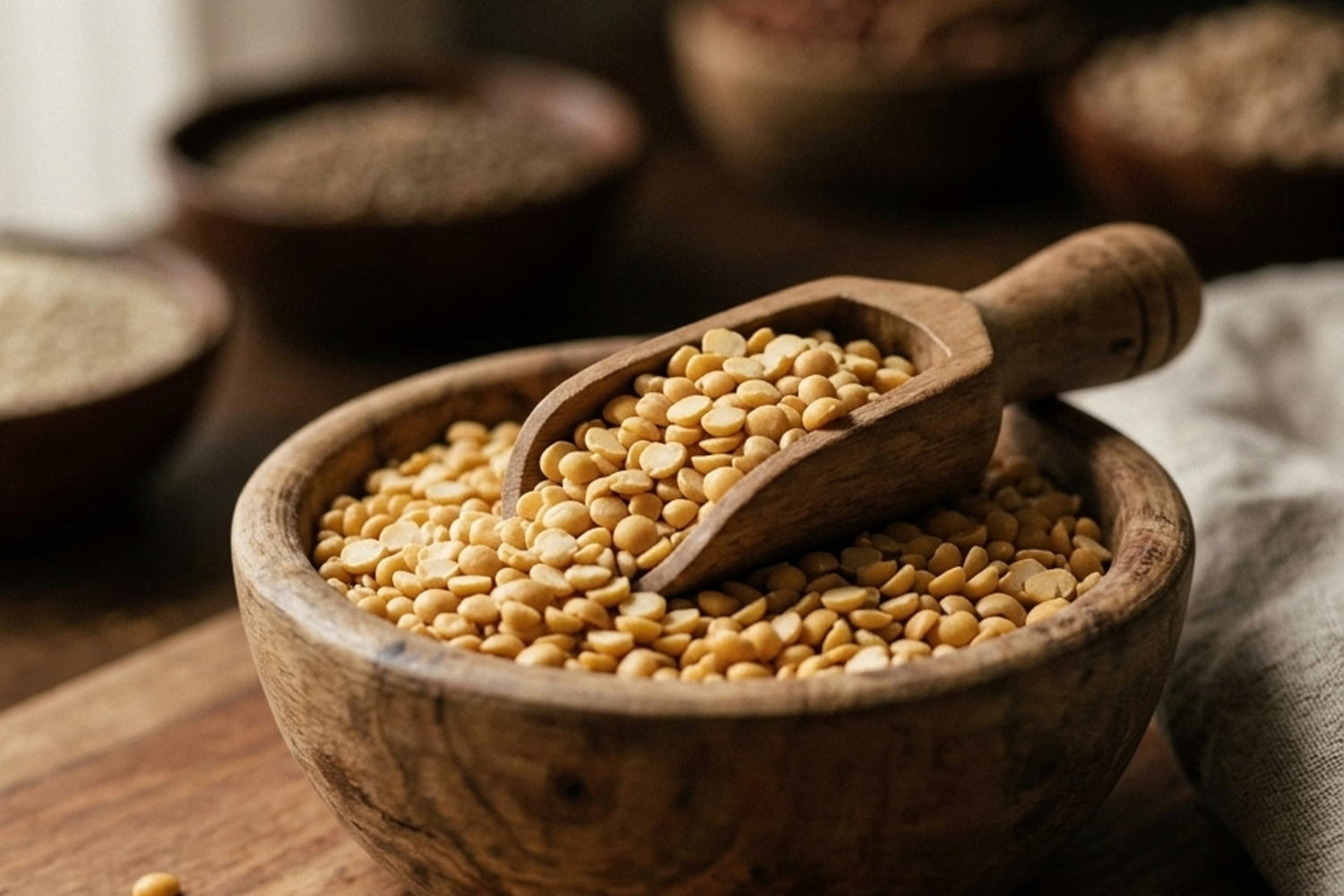
Pick up any pack of dal and read the back. You will find the weight, the MRP, a licence number, a packing date and a best-before date. All of it is required by law, and all of it is useful.
Now try to answer three simple questions from that label. Where did this dal grow? When was it harvested? What was done to it before it was packed? Usually you cannot.
Polished and unpolished dal: what is the difference?
This is the most common thing a label leaves vague.
After dal is cleaned and split, many mills add a finishing step. The grains are buffed so they look bright, smooth and identical. Water or oil is sometimes used to add shine. The result looks better on a shelf.
Unpolished dal skips that step. It is cleaned and split, and that is all.
How to identify unpolished dal at home
You do not need a lab. Use your eyes and hands.
- Look at it. Unpolished dal is matte, not glossy. The colour varies a little from grain to grain.
- Rub it. Take a handful between dry palms. It should feel dry and slightly dusty, not slick.
- Rinse it. The first wash will be a little cloudy from natural starch. It should not look oily or strongly yellow.
Very shiny, perfectly uniform dal is a sign that something was done to make it look that way.
Three more things most labels leave out
Where it grew. “Product of India” covers a very large country. Toor dal from one district does not cook like toor dal from another. We name the place on every product: toor dal from Sultanpur, moong dal from Jaipur, chana dal from Indore.
When it was harvested. The packing date is when the dal went into the bag, not when it left the field. Dal that has sat in storage for a long time dries out, gets harder and takes longer to cook. If your dal refuses to soften, age is the usual reason.
How it cooks. No label tells you whether the dal turns creamy or stays grainy, or how it smells when the tadka goes in. That only comes from someone having cooked it first. We do.
What to ask before you buy
You do not have to buy from us to shop better. Ask any seller:
- Which region is this from?
- Is it polished?
- Roughly when was it harvested?
A seller who knows their product can answer all three. If nobody can tell you, that is an answer too.
Why this matters to us
We eat dal almost every day. It seems strange that we know the estate our coffee came from and nothing about the dal in the cooker. Earthenic began with that discomfort. Our dals are unpolished, we name where each one comes from, and we cook everything before we sell it.
Ordering in Hyderabad
Earthenic is based in Hyderabad and delivers across the city. Our toor, moong, chana and urad dals are unpolished, and each one names where it was grown. You can order on WhatsApp or browse the pantry.
Common questions
What is the difference between polished and unpolished dal?
Polished dal goes through an extra buffing step, sometimes with water or oil, that makes every grain shiny and even in colour. Unpolished dal is only cleaned and split, so it looks matte and less uniform.
How can I identify unpolished dal?
Unpolished dal looks dull rather than glossy and the grains vary slightly in shade. Rub a handful between dry palms: it should not leave an oily feel. When you rinse it, the water should not turn oily or strongly coloured.
Where can I buy unpolished dal in Hyderabad?
Earthenic is based in Hyderabad and sells unpolished toor, moong, chana and urad dal with the growing region named on each one. You can order on WhatsApp for delivery in the city.
Does unpolished dal take longer to cook?
Not by much. Cooking time depends more on the age of the dal and whether you soak it. Older dal of any kind takes longer to soften.
Why does the packing date not tell me how fresh the dal is?
The packing date is when the dal went into the bag. It can be many months after the harvest. Dal that has been stored for a long time dries out and takes longer to cook.